


Our micro-webinar series continues to draw a crowd – An introduction to continuous odour monitoring.
31 August 2026
Share


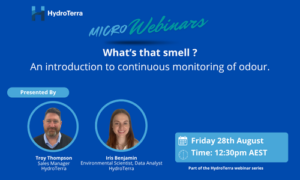 Our micro-webinar series continues to be popular. We had a big audience tune in to learn how continuous air quality and odour monitoring can help organisations better understand environmental impacts, respond to complaints, and make faster operational decisions. While traditional odour assessments remain the regulatory standard, continuous monitoring provides valuable real-time insights to support environmental management.
There were several key learnings from the webinar:
- Odour is a major community and regulatory issue, often driving complaints, investigations, and compliance action.
- Odour cannot be measured directly by sensors. Instead, monitoring systems track gases such as H₂S, NH₃ and VOCs that act as odour indicators.
- Continuous monitoring complements traditional odour assessments, helping identify when, where and why odour events occur.
- Meteorological data is critical, with wind speed, wind direction, temperature and humidity providing important context for understanding pollution and odour impacts.
- Real-time monitoring supports faster response and investigation, enabling organisations to detect issues early, trigger alerts, investigate complaints and improve environmental performance.
- Modern sensor networks are making air quality monitoring more accessible, providing greater coverage and operational visibility than traditional monitoring approaches alone.
The bottom line is; continuous odour monitoring is not a replacement for EPA-approved odour assessments, but it is a powerful tool for improving operational awareness, reducing risk, and turning environmental data into actionable decisions.
If you missed the webinar you can visit our webinar library and watch the recording.
Webinar Library