


Understanding Algae monitoring: A crucial tool for Aquatic Health Management
29 May 2025
Share


 Recent reports of a significant algal bloom event near Adelaide have once again highlighted the critical importance of algae monitoring in both fresh and marine water environments. According to the ABC, the bloom—occurring in the Barker Inlet area—was associated with widespread fish kills and warnings for recreational users, raising concerns about the potential ecological and economic consequences of unchecked bloom events.
Algal blooms, particularly those involving cyanobacteria (commonly known as blue-green algae), can be triggered by a complex interplay of factors including nutrient loading, temperature rise, and stagnant water conditions. Monitoring for early indicators of bloom conditions is key to timely intervention and risk mitigation.
HydroTerra offers a suite of integrated monitoring solutions utilising advanced sensor technologies from trusted manufacturers such as Aquaread and nke Instrumentation. These sensors are tailored to different aquatic environments—freshwater and seawater, respectively—and are compatible with handheld and long-term telemetry-based platforms.
Algae Monitoring in Freshwater: Aquaread’s Sensor Suite
Aquaread provides a range of fluorometric sensors specifically designed for blue-green algae detection in freshwater systems. These sensors differentiate between two main pigments associated with cyanobacteria:
- Phycocyanin (PC): Typically found in freshwater blue-green algae species.
- Phycoerythrin (PE): More common in brackish and some marine species but can also appear in certain freshwater strains.
These pigments fluoresce under specific light wavelengths, allowing for in-situ detection and quantification. Aquaread’s blue-green algae sensors are highly suited to lakes, reservoirs, and rivers, offering compatibility with both spot-checking via portable meters and continuous monitoring via deployed data loggers.
In addition to PC and PE sensors, Aquaread also offers a Chlorophyll-a sensor. While chlorophyll-a is present in all photosynthetic algae and not specific to harmful cyanobacteria, elevated levels can be used as an early indicator of algal growth. When used in conjunction with PC/PE sensors, it provides a more complete picture of bloom dynamics.
 Marine Applications: nke Instrumentation’s Advanced Fluorescence Sensors
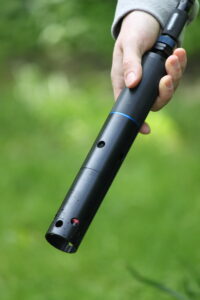 Marine Applications: nke Instrumentation’s Advanced Fluorescence Sensors
For coastal and offshore monitoring, nke Instrumentation offers robust sensor solutions designed for harsh marine environments. Their WiMo sensor suite includes fluorescence-based detection of:
- Chlorophyll-a
- Phycocyanin
- Phycoerythrin
These sensors are designed for integration into fixed platforms or autonomous systems, and provide continuous high-resolution data on phytoplankton activity. By measuring the fluorescence signatures of specific pigments, the nke sensors enable targeted monitoring of bloom-forming algae even in complex saline environments.
With climate variability and nutrient enrichment continuing to pressure aquatic ecosystems, proactive monitoring of algal blooms has become an essential component of water quality management.