


It was great to have Allison Reynolds back for another popular webinar
29 June 2026
Share


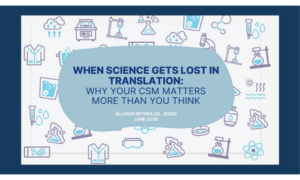
Allison Reynolds from JBS&J is one of our record holders for the most popular webinar, Allison joined us again and presented a HydroTerra webinar that reinforced a key message for environmental practitioners: a conceptual site model (CSM) is only as effective as how well it is communicated. While CSM’s are central to understanding contamination and risk, their value is lost if stakeholders cannot clearly interpret or trust the message.
 Key takeaways:
- CSMs are communication tools, not just deliverables
They translate complex site understanding into a form that supports decision-making across clients, regulators and communities. - Start early and keep evolving
Iterative CSM’s help identify data gaps, guide investigations, and reduce risk, cost and rework. - Poor communication undermines good science
Even technically sound assessments can fail if uncertainty, assumptions and risk are not clearly communicated. - Trust is built through transparency and consistency
Openly acknowledging uncertainty and adapting messaging as new data emerges strengthens stakeholder confidence. - Risk perception differs for communities
Technical definitions of risk do not always align with public concerns, making empathy and clarity critical. - Engagement should be early, ongoing and two-way
Listening, using plain language and incorporating community knowledge leads to better outcomes. - Real projects show communication can make or break outcomes
Case studies highlight that poor communication can drive distrust; even when the science is correct.
Bottom line:
The bottom line is; strong CSM’s and strong communication go hand in hand delivering better decisions, better stakeholder outcomes, and ultimately, better environmental results.
To watch the webinar please visit the HydroTerra webinar library.
Visit our Webinar Library