


Thank you to Ashton Soltys for joining the HydroTerra webinar series.
01 September 2025
Share


This presentation gave us great insight into the complex challenges of managing Acid and Metalliferous Drainage and arsenic-rich effluent, and demonstrated how thoughtful design, engineered containment, and innovative measures like the Permeable Reactive Barrier can deliver real, measurable improvements.
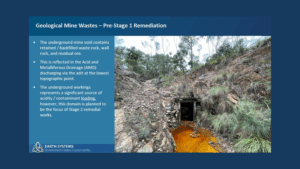 Key learnings from the presentation:
Historical Context: The mine operated between ~1880 and ~1960, extracting over 100,000 tonnes of ore, leaving behind significant geological and refinery waste.
Acid and Metalliferous Drainage (AMD): is a major environmental challenge caused by sulfide oxidation. Remediation strategies focus on source control and neutralization using limestone and iron oxides.
Containment Cell Design: Reactive sulfidic wastes were blended with limestone, layered strategically, and capped with clay and soil to minimize AMD generation and pollutant mobilization.
Permeable Reactive Barrier (PRB): A temporary passive water treatment system was installed to intercept and treat arsenic-laden runoff and groundwater. The PRB uses iron and aluminum oxides/hydroxides to adsorb arsenic and other contaminants.
Water Quality Improvements: Post-remediation, salinity, acidity, and dissolved arsenic concentrations decreased significantly, with arsenic levels reduced by ~90%.
Future Plans: Stage 2 remediation will address refinery wastes and further improve site conditions.
Collaborative Effort: The project involved geochemists, engineers, ecologists, and government programs, showcasing the importance of multidisciplinary collaboration.
We greatly appreciate your time, expertise, and the passion you brought to this session. Thanks for joining us!
For those of you who missed the event or would like to watch it again you can find it in the webinar section of our website.
Visit our Webinar Library