


Use of Learning and Artificial Intelligence in supplier products
27 April 2026
Share


More and more suppliers are turning to AI and different learning methodologies to improve the quality of data from their systems and to enhance capabilities. Here are a couple of examples from our suppliers.
Geolux.
Whilst not strictly AI, Geolux Flow Meters (RSS 2 300WL, FX series) use methods that rely on statistical learning from real world hydraulic behaviour. These flowmeters perform fully automated
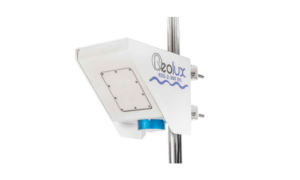
A Geolux flow meter
discharge estimation using:
- Surface velocity
- Radar water level
- Configured or scanned channel geometry
Embedded intelligence includes:
- Detection of flow regime changes
- Automatic rejection of unstable measurements during hydraulic transitions
- Compensation for partial obstructions and roughness effects
As an example, the Geolux RSS-2-300WL instrument is constantly calculating various parameters of the signal in the signal processing algorithms and will continuously, along with measurement data, report the measurement quality. The quality indicator value ranges from 0 (best quality) to 3 (worst quality) and can be used to interpret the data in the analysis software with better understanding and confidence. For example, when the radar is mounted on the railway bridge, one of common applications, the measurement quality will be very good most of the time, except when a train is passing due to the extensive vibrations. In this case the radar will still report measurements but the reported values could be quite wrong, and also the measurement quality indicator value will go up to a higher value. It is then up to every user to interpret the quality indicator value for their application.
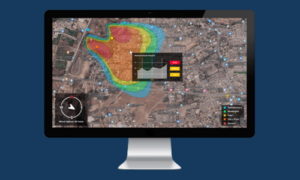
Oizom’s Envizom software
Oizom
Oizom’s Envizom is a web-based cloud platform for real-time air quality monitoring and analytics, powered by Oizom’s advanced environmental interpretation engine. Envizom collects and refines data from environmental monitoring stations, presenting it through an interactive dashboard with diverse chart options and geo-mapped device locations. The data is securely encrypted, ensuring reliable and safe access to critical air quality information.
Data analytics is used extensively to make understanding air pollution easier and more effective, especially with platforms like Envizom. By analysing air quality data, it helps identify pollution sources, track patterns, and provide insights that lead to smarter decisions. Tools like machine learning even allow Oizom to predict future pollution levels and tackle issues before they worsen. Combined with Oizom’s monitoring systems, which capture accurate real-time environmental data, the Envizom platform can turn complex numbers into clear visuals and easy-to-read reports. This makes the data accessible to everyone and enable them to take action to improve air quality.