


Smarter tools, safer habits: How HydroTerra is using AI to work better
27 April 2026
Share


AI isn’t coming, it’s here. And for good reason: it’s one of the most powerful tools to emerge in a generation.
But adopting new technology and adopting it well are two very different things. Here’s how we’re approaching it at Hydroterra.
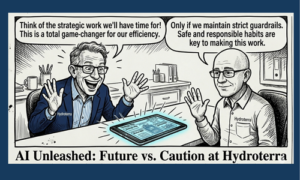 The opportunity (and the Reality Check)
The practical value of AI is getting harder to ignore, with incredible new tools being released on a near-daily basis. It can summarise information in seconds, draft comms, and help analyse complex data. But more tools does not automatically mean better outcomes. The real question becomes: which tools do we actually use, which do we leave alone and how do we mitigate the risks that come with each?
AI can produce answers that sound spot-on but are actually wrong and without the right guidance, it’s easy for users to share something they shouldn’t or take an output at face value. That’s why we’ve built our approach around safe, effective and responsible use from the start. We’re teaching our team to apply their own judgement, verify every output and treat AI as an assistant, not a substitute for expertise.
A staged rollout with quality baked In
Rather than allowing unrestricted access to everyone all at once, we’ve rolled AI out in stages. Representatives from each business unit are testing tools in real workflows, reporting back weekly on what’s working, and helping us refine as we go. The team has also been developing structured prompt templates and documenting real use cases to keep outputs consistent no matter who’s doing the work.
Alongside the rollout, we’ve introduced weekly training sessions focused on responsible and effective use, tightened our information-handling rules, and updated data permissions across the business. With the pace of the AI revolution, precautions around data security are more important than ever.
Big wins and what this means for you
It’s the most routine tasks where we’ve seen the biggest wins so far. Take meeting minutes: what used to require manual notetaking and formatting is now drafted automatically and reviewed in a fraction of the time. Across dozens of meetings each week, the hours the team get back really add up.
Internal data retrieval is another area showing real promise. Rather than manually searching through project archives, reports, and technical documents, our team can now surface relevant product information and past use cases in seconds. That means faster answers, less duplication of effort and more time spent applying knowledge rather than hunting for it.
And that’s the point. Those hours free our team to focus where it matters most: the analysis, problem-solving, and expert advice that directly supports you. Early results are showing real time savings on routine internal tasks, giving our specialists more capacity for the technical work delivered to you.
We’re genuinely excited about what’s ahead.
If you’d like to hear more about how we’re approaching our AI journey, feel free to get in touch and share your company’s approach with us.
Get in Touch