


Understanding Passive Diffusion Bags
27 February 2025
Share


Equilibrator Passive Diffusion Bag-12ix1.75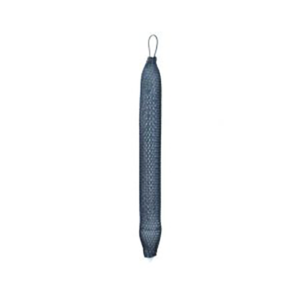
Passive Diffusion Bags (PDBs) were introduced over 20 years ago as a more streamlined, cost-effective solution in sampling for Volatile Organic Compound (VOC) concentrations in groundwater monitoring wells.
Over the years membranes with different pore sizes were developed that can accurately sample for all contaminants, including, metals, inorganics, ionic compounds, SVOCs and contaminants such as 1,4 Dioxane and PFAS.
There are two types of diffusion samplers: PDBs and Dual Membrane Passive Diffusion Bags (DMPDB).
- Standard PDBs are effective and reliable for any site where VOCs are the main contaminant of concern.
- DMPDBs is made of HDPE that provides representative, discrete interval samples of nearly any dissolved compound, including PFAS.
PDBs are typically 18 to 28-inch-long flexible, tubular “bags”, made from, semi-permeable, polyethylene membranes. They are filled with deionized water, sealed, and deployed on a weighted tether into the saturated screen interval of 1-inch and larger monitoring wells.
When PDBs are deployed, contaminants in the groundwater diffuse through the microscopic pores in the membrane and equilibrate with the deionized water inside the bag over about 2-3 weeks’ time.
Once equilibrium is reached, the concentrations in the PDB continually adjusts to the surrounding groundwater concentrations so that the sampler always represents the constituents of the last several days of residence time.
That means PDBs can be installed at one sampling event and left in-place, indefinitely, until the next sampling event and then recovered with a representative sample. No bailing, no pumping, no waiting for parameters to stabilize. Simply pull out the sampler and discharge into a sample container.
Please contact us for a quote or to discuss your needs. Contact Us